Bulk-generate & schedule posts in seconds with Smart Scheduling. Try now!
Social media management costs in 2026: A pricing guide for businesses
 Published by Sadia
Social media is baked into how people communicate, shop, and research brands, with 60+ social media statistics showing that billions of users engage across platforms every day. Most people open social media platforms to catch up with friends, follow the news, or scroll through viral content—and many sign up simply out of FOMO.
For brands, though, social is not just entertainment. It is a major source of attention and website traffic for businesses. The apps are free, but effective social media management is not. There are real, ongoing social media management costs tied to content production, tools, and the people who run your channels. Even reading posts about social media management makes it clear how many moving parts are involved.
In 2026, entrepreneurs, agencies, creators, and e-commerce brands commonly pay for:
- Strategy and planning time
- A social media management platform or social media management tool
- Content creation (copy, design, video, photography)
- Community management and customer support
- Reporting, analytics, and experimentation
- Paid social campaigns and influencer partnerships
All of this rolls up into your overall social media management costs. This guide breaks down what social media management is, what services you typically pay for, how pricing works in 2026, what different business types actually spend, and how to build a budget that drives growth—not just social media posting for the sake of it.
What is social media management?

Social media management is the ongoing process of planning, creating, scheduling, publishing, and analyzing content across your social channels. It also includes engaging with your audience, handling customer questions, and protecting your brand reputation.
Done well, social media management:
- Builds awareness and trust
- Nurtures prospects and customers
- Collects feedback and insights
- Supports sales, retention, and referrals
It goes far beyond “posting when you remember.” It is a coordinated system across people, processes, and social media management tools. For most organizations, that means using at least one dedicated social media management platform plus a social media scheduling tool, a design app, and analytics.
Social media management vs. social media marketing
These terms are often mixed up, but they are not the same:
- Social media marketing is the strategy. It defines goals, target audiences, positioning, and big-picture campaigns. It answers why you are on social and what success looks like.
- Social media management is the execution. It brings that strategy to life through daily tasks, content creation, social media posting, scheduling, replying to comments and DMs, reporting, and ongoing improvements.
You can have a smart social media marketing strategy on paper, but without consistent management, the plan never comes to life. Likewise, managing accounts without a clear strategy usually leads to random posts and weak results.
Understanding this distinction matters because social media management costs rise as you move from “just posting” to a complete, integrated system that supports real business goals.
Significance of social media management
Before discussing rates and budgets, it helps to understand why social media management deserves a dedicated line item in your marketing plan. Global social media statistics show consistent growth in user engagement and platform diversity every year, with 25 key social media marketing benchmarks for 2025 highlighting just how rapidly audience behaviors are shifting across platforms. Once you see how a structured approach supports awareness, sales, and customer service, it becomes easier to justify, plan, and optimize your social media management costs.
Make social media content publishing consistent
Social media management comes in handy when you want to post social media content regularly or grow your audience. Proper planning usually includes:
- A documented strategy
- A content calendar or social media planner
- A reliable social media management tool with scheduling, approvals, and analytics
There is a ton of help available on the web to establish a social media content plan. Check out the social media content calendar for ready-made social media posts for the whole year.
Consistent social media posting matters because:
- Algorithms favor accounts that post regularly
- Your audience learns when to expect content from you
- You get more data to see what works and what does not
Without a clear plan and a social media scheduler, you end up posting only when inspiration strikes—which makes it harder to grow.
Get a competitive edge over the competition
One key reason to set up a social media management system for your business or organization is that it gives you a competitive edge.
Most businesses never commit to a documented plan or a dedicated social media management platform. No wonder they struggle to post social media content consistently. As a result, they lose attention, engagement, and clicks to competitors who show up every day.
Simple ways to stand out:
- Reply to comments and DMs faster than your competitors
- Share original perspectives, not just curated content
- Mix formats (Reels, carousels, Stories, lives, long-form posts)
- Use analytics to double down on content that performs
The easiest way to gain an edge on social media is to engage. Communicate clearly, respond quickly, and be helpful.
Stay relevant in a fast-paced world
It is almost impossible to log in to three or four social platforms every day, post manually, answer incoming messages, and still do your main job.
That is where an automated social media scheduling and publishing system comes in. With the right social media management tools, you can:
- Queue posts across multiple platforms
- Batch content creation for the week or month
- Keep engagement and messages in one inbox
- Monitor performance over time
Once you establish a social media content publishing rhythm, your brand stays relevant instead of appearing only during launches or campaigns.

What do social media management services include?
Several social media jobs fall under social media management services. Brands, influencers, and agencies hire experts in these areas regularly, either in-house, as freelancers, or through agencies.
Below are core services that often make up your social media management costs.
Graphic and image design

Almost all social platforms rely on engaging, attractive visuals—Facebook, X (Twitter), LinkedIn, YouTube thumbnails, Instagram, and Pinterest.
Social media imagery is essential to publishing strong content. Any social media marketing campaign is incomplete without compelling, creative images and graphics.
To run social media management for clients, you either hone your design skills or use the best AI tools for designers to create platform-specific graphics. A graphic designer in the U.S. can cost somewhere between $25 to $150 per hour, depending on skill, speed, and niche.
Video content production and editing

Video content editing: Video editing is not everyone’s cup of tea. Becoming a strong video editor usually requires both passion and practice.
There are many editing tools—Premiere Pro, Final Cut Pro, iMovie, Filmora, DaVinci Resolve—and the editor needs to be comfortable in at least one.
A talented video editor can be a valuable resource for any social media management team, especially if you rely on Reels, TikToks, YouTube Shorts, or long-form video. You can typically hire someone for between $50 to $150 per hour, depending on experience, portfolio, and turnaround time.
Social media marketing and channel management
Social media marketing is one of the key social media management services. Usually, brands and agencies hire social media managers to oversee their content teams and keep publishing on track.
Social media managers are responsible for:
- Turning strategy into a monthly content plan
- Managing the social media planner and calendar
- Scheduling content with a social media scheduling tool
- Tracking performance and reporting on results
- Engaging with followers, comments, and DMs
Often, social media managers add social media virtual assistants (VAs) to scale content creation, distribution, and community management.
Social media management costs for this role typically range between $35 to $350 per hour, depending on expertise, scope, and reputation.
Content writing and SEO
Content writing and SEO fuel the words behind your social posts, landing pages, and blogs.
Content writers and SEO experts often work side by side, closely aligned with the social media marketing team so that:
- Messaging stays consistent across channels
- Social posts support search-driven content (and vice versa)
- Content is repurposed into multiple formats
Content writing costs depend on the pricing model you choose. Many writers charge $250 to $399 per article, while others charge per word, per project, or as part of a monthly retainer.
Community management and social customer care
Community managers handle:
- Comment and DM replies
- Escalations to support or sales
- Group moderation and community initiatives
- Sentiment monitoring and feedback loops
Agencies and freelancers may charge $30 to $140+ per hour for community management, especially if it includes content creation and customer service responsibilities.
Paid social and influencer management
Many brands treat paid social and influencer marketing as part of their broader social media management:
- Campaign setup, targeting, and optimization
- Ad creative creation and testing
- Influencer sourcing, negotiations, and approvals
- Tracking performance and ROI
Influencer fees can range from $40 to $150 per post for nano influencers to $300+ per post for mid-tier creators, depending on platform and audience size.
These are some of the common social media management roles and services that shape your total social media management costs.
Key factors that influence social media management costs

Why does one business pay $400 per month and another $40,000 per month for social media management? Several factors shape your final cost.
1. Number of platforms and content volume
Managing one Instagram account is very different from running Instagram, TikTok, LinkedIn, Facebook, X, and YouTube at the same time.
Costs increase when you:
- Add more platforms
- Increase posting frequency
- Add more content formats like Reels, Stories, long-form video, carousels, and live streams
- Require content in multiple languages or regions
Each channel needs channel-specific content, time spent monitoring metrics and trends, and active engagement.
2. Business size and complexity
A solo founder with one product has simpler needs than a multi-location retailer or global SaaS company.
- SMBs typically focus on foundational activities: steady posting, basic engagement, and modest ad spend.
- Mid-market brands add more complex campaigns, collaboration workflows, approvals, and advanced analytics.
- Enterprises often require dedicated social customer care teams, social listening, custom integrations, and legal review.
As complexity grows, so do your social media management costs.
3. In-house vs. freelancer vs. agency
Your model significantly impacts cost structure:
- In-house teams
- Higher fixed costs (salaries, benefits, training)
- More control, faster collaboration, deeper brand knowledge
- Freelancers
- Flexible, often billed hourly or per project
- Cost-effective for specific tasks or smaller scopes
- Great for specialized skills like video, design, or copy
- Agencies
- Higher retainers but provide a full team (strategy, design, copy, paid social, analytics)
- Established processes, reporting, and backup support
- Can manage multi-channel, multi-market programs
Many brands adopt a hybrid setup: one in-house manager plus freelancers or an agency for content creation and ads.
4. Scope of work
“Three posts per week on one channel” is not the same as full-funnel support that includes:
- Strategy and positioning
- Organic posting on 3–5 networks
- Community management and support in DMs
- Paid campaigns, retargeting, and testing
- Influencer collaborations and partnerships
- Quarterly reviews and optimization
The broader the scope, the higher your ongoing social media management costs.
5. Experience, niche, and geography
Rates increase with experience and specialization. Junior managers and generalists charge less; senior strategists, paid social specialists, and creators with strong portfolios charge more.
In regulated or complex industries such as finance, healthcare, and B2B SaaS, expect higher rates for specialists who understand compliance and buyer behavior.
Location also matters. Providers based in major metropolitan areas with a high cost of living typically charge more than those in smaller cities or regions.
6. Social media management tools and software
Your tech stack has a direct impact on your budget. Common software line items include:
- A social media management platform for publishing, approvals, and analytics
- A social media scheduling tool for multi-channel planning
- Design and video editing software
- URL management and link tracking
- Social listening tools
- Reporting and dashboard tools
You can control costs by choosing an all-in-one social media management tool that replaces several point tools and subscriptions.
7. Paid media and creator budgets
Paid social and creator partnerships are not strictly “management,” but they almost always sit under the same budget umbrella.
You should separate:
- Management fees – what you pay for people and tools
- Media spend – what you pay directly to platforms like Meta, TikTok, X, and LinkedIn
- Creator/influencer fees – flat payments, commissions, or product-based deals
This separation keeps ROI calculations honest and helps you see whether you are under- or overspending in any category.
Average social media management costs and pricing tiers
While exact numbers vary, most businesses fall into a few typical ranges when budgeting for social media management costs each month.
Overall cost ranges
Across industries, you can expect:
- Basic programs: roughly $500–$2,000 per month
- Growth programs: roughly $2,000–$5,000 per month
- Comprehensive, multi-channel programs: usually $5,000–$15,000+ per month
These totals often combine:
- Platform management (planning, scheduling, monitoring, engagement)
- Content creation (copy, design, video)
- Strategy and reporting
- Optional add-ons like paid ad management, influencer outreach, and advanced analytics
Common package tiers
Many agencies and experienced freelancers package services into tiered retainers:
- Starter / basic package ($500–$2,000/month)
- 1–2 platforms
- 8–12 posts per month
- Light community management
- Standard monthly analytics report
- Growth / mid-tier package ($2,000–$5,000/month)
- 2–3 platforms
- 15–25 posts per month
- Active community management
- More original graphics and short videos
- Deeper performance reporting and optimization
- Premium / enterprise package ($5,000–$15,000+/month)
- Multiple platforms with daily posting
- High-end content (custom graphics, professional video)
- Ongoing experiments and campaigns
- Paid ad management and influencer coordination
- In-depth reporting and a dedicated account manager
Use these ranges as a starting point, then adjust for your platforms, content quality, niche, and goals.
Social media management pricing models in 2026
Even though specific numbers vary, pricing models for social media management tend to fall into a few common buckets.
Hourly rates
Freelancers and consultants often charge by the hour, especially for:
- Audits
- Strategy sessions
- Short-term support
- Training and consulting
Typical hourly ranges in 2026:
- Beginner / assistant level: $20–$40 per hour
- Intermediate social media manager: $40–$80 per hour
- Senior strategist or specialist: $80–$250+ per hour
These overlap with the earlier estimate that social media management can cost $35 to $350 per hour, depending on skill and scope.
Hourly pricing works best when the scope is uncertain or short-term, but it can make monthly budgeting trickier.
Monthly retainers
Retainers are the most common way agencies and experienced freelancers price social media management. Retainers usually cover a fixed set of deliverables each month, such as:
- A defined number of posts per platform
- Content planning and scheduling in a social media planner
- Community management hours
- Reporting and optimization calls
Packages for small brands might start around $500–$1,500 per month, while multi-channel, content-heavy retainers for larger companies can range from $5,000–$30,000+ per month.
Retainers give you predictable social media management costs and allow your provider to plan ahead and invest in your long-term growth.
Project-based pricing
Sometimes you only need help with:
- A product launch
- A seasonal campaign
- A full social media strategy and playbook
- A one-time account or content audit
In these cases, providers usually quote a flat project fee based on estimated hours, complexity, and the number of deliverables. Project fees can range from a few hundred dollars for simple setups to $10,000+ for in-depth, multi-phase engagements.
Performance-based and hybrid models
A small but growing number of consultants and agencies blend flat fees with performance incentives, such as bonuses tied to:
- Leads or sales generated from social
- Cost per acquisition targets
- Growth in qualified demo requests or email signups
For most brands, a hybrid model (base retainer + success bonus) can align incentives while still giving predictable baseline costs. Pure performance-only deals are riskier for providers because so many variables are outside their control.
Social media management pricing in 2026
Social media management pricing still varies widely from business to business in 2026. It depends on content quality and volume, expertise level, number of platforms, paid media and creator budgets, and your tool stack and internal resources. The more you invest thoughtfully in social media management, the better your results—assuming your social media content strategy is clear and you avoid common mistakes like posting without a goal or ignoring analytics.
Below is a ballpark breakdown of social media management costs for different kinds of businesses. Always confirm current pricing with any vendor or agency you consider.
For entrepreneurs:
Solo founders and personal brands can manage social media with a lean but effective setup. A social media management tool like ContentStudio, on its entry plan, typically sits at the lower end of the market (often in the $20–$30 per month range—check the pricing page for current pricing).
Add Canva Pro at roughly $12.99/month for design and a link-in-bio tool for $5–$10/month. Expect to spend around $45–$60 per month on tools, plus your own time. This covers a basic social media management platform, professional design features, and link tracking.
For startups:
Startups need more structure while still watching cash flow. A common toolkit might include ContentStudio on an Advanced plan (mid-tier pricing) and Canva Teams at about $14.99 per user per month.
Add freelance support: $500–$1,000 for a freelance social media manager and $300–$600 for content writing services each month. Many startups also add AI writing tools and analytics platforms priced at $20–$50/month to improve output and insights.
Overall, expect $900–$1,750 per month, depending on how much work you outsource and which tools you choose.
For small businesses:
Small businesses try to control expenses but often need more consistent social media management than very early-stage startups. They frequently work with freelancers, so they are not locked into salaries.
Typical monthly costs might include $39–$49 for a social media scheduling tool (for example, a plan from ContentStudio or a similar platform), $5–$10 for invoicing software, around $7 for a simple online image maker, and $500–$1,000 for articles and social media content.
If they add part-time help for engagement or paid social, the budget may increase by a few more hundred dollars per month.
For agencies:
Social media and content agencies manage dozens or hundreds of accounts, so their social media management costs scale quickly. They pay for salaries, training, tools, client reporting, and paid ads.
Comparing their budgets to a startup’s does not make sense. A rough range is $10,000 to $50,000+ per month for salaries and tools tied directly to social media management, especially once you add ad managers, strategists, editors, and account managers into the mix.
Social media management prices change over time and vary by market. The biggest variables are experience, expertise, and the quality of your content and campaigns. You cannot compare a beginner social media manager to someone with a decade of experience and proven results across multiple industries.
Freelancer vs. agency vs. in-house: which model fits your budget?

Choosing who will run your social accounts is just as important as deciding how much to spend.
Freelance social media managers
- Cost: Typically $35–$150+ per hour or $500–$2,500 per month for retainers
- Best for: Small businesses, startups, and solo brands with focused needs
- Pros:
- Direct communication and personalized service
- Flexible scope and hours
- Lower overhead than agencies
- Cons:
- One person cannot always cover strategy, copy, design, and video
- Limited capacity if your needs grow quickly
- You may need to manage additional freelancers for specialized tasks
Social media agencies
- Cost: Often $1,000–$5,000+ per month for basic packages; $10,000+ for full-service offerings
- Best for: Brands needing multi-channel support, paid ads, and advanced analytics
- Pros:
- Access to a team of specialists (strategists, designers, editors, ad managers)
- Mature processes for planning, approvals, and reporting
- Ability to scale quickly and cover vacation or sickness
- Cons:
- Higher social media management costs
- Less frequent direct access to the person doing the day-to-day work
- Social media may be one service among many, depending on the agency
In-house teams
- Cost: Salaries, benefits, tools, and training—often more expensive on paper but can be efficient at scale
- Best for: Brands with long-term, high-volume needs and complex approvals
- Pros:
- Deep brand knowledge and alignment
- Real-time collaboration with other departments
- Easier cross-functional campaigns with product, CX, and sales
- Cons:
- Longer hiring timelines
- Risk of skill gaps if you only have one or two people
- Fixed costs even when activity dips
Many brands start with a freelancer, then graduate to an agency or hybrid model as social media management costs and complexity increase.
Pricing strategies for agencies and freelancers
If you sell social media management services, how you set prices matters just as much as what you charge.
Cost-based pricing
You calculate all costs (labor, tools, subcontractors, overhead) and add a markup—often 20–50%—to reach your final rate.
- Pros: Simple and clear
- Cons: Ignores market demand and perceived value; can underprice high-impact work
Competition-based pricing
You research what similar providers charge, then position yourself slightly above, below, or in line with those rates.
- Pros: Anchors your pricing in market reality
- Cons: Easy to get stuck in price wars or undervalue a differentiated service
Value-based pricing
You set prices based on the value you deliver rather than hours worked.
- Pros: Lets you charge more when you can clearly show ROI
- Cons: Requires strong case studies, confidence, and negotiation skills
In practice, many agencies and consultants use a blend of these approaches to set sustainable social media management costs while staying competitive.
Best tools for social media management in 2026
Social media management is incomplete without a powerful yet easy-to-use dashboard. A strong social media management platform acts as your command center for planning, social media posting, engagement, and reporting.
Let’s look at some of the best tools.
1. ContentStudio
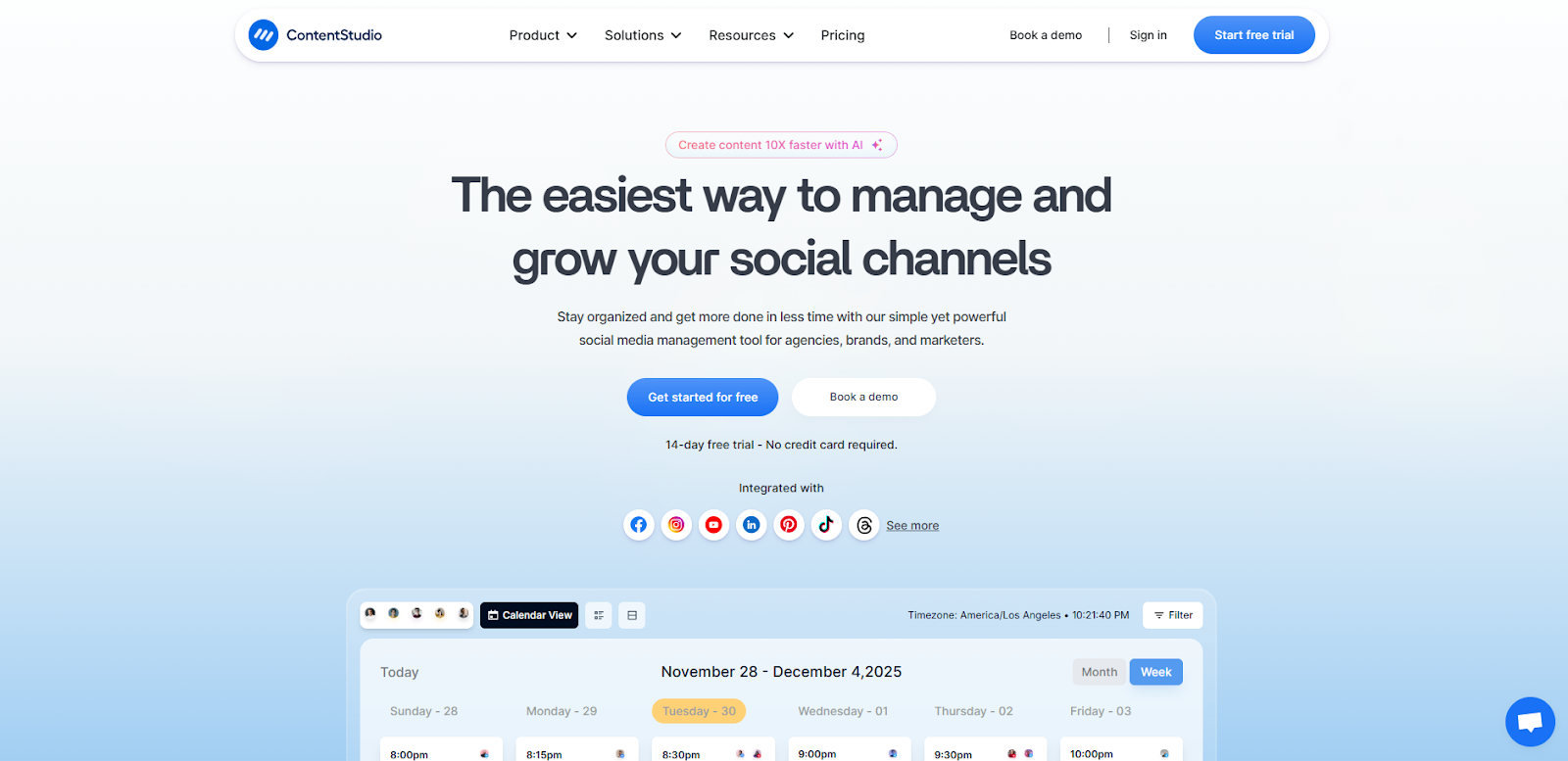
ContentStudio is an all-in-one AI-powered content creation and social media management software for brands, small businesses, marketers, and agencies. It provides a complete social media marketing suite to grow your reach.
ContentStudio is an excellent tool for brands, bloggers, influencers, and agencies to publish, schedule, discover, plan, approve, and analyze content from one place. It works as both a social media management tool and a social media scheduling tool, with a visual content calendar that doubles as a social media planner.
Sign up for a 7-day free trial and experience the full suite of features.
Features
- Social media scheduling
- Social content calendar
- AI Studio for AI-assisted content creation
- Workspace and collaboration
- Influencer discovery
- Social media analytics
- Approval workflow and client review
Pricing
The Starter plan begins around $19 per month, the Pro plan around $49 per month, and the Agency plan around $99 per month. Always check the website for the latest pricing.
2. Replug
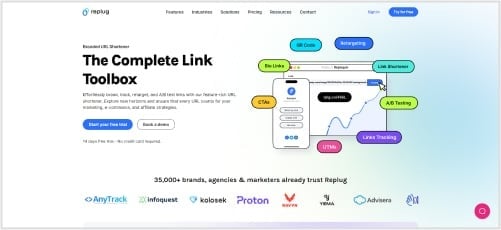
Replug is an all-in-one URL shortener with several link-management features. In addition to URL shortening, this tool offers a wide range of URL management features to strengthen your link strategy.
Powerful URL management is useful in email marketing, social media marketing, and paid advertising. Try the 14-day free trial!
Features
- URL shortening
- Bio links
- UTM parameters
- Deep linking
- A/B testing
- QR codes
- Retargeting
Pricing
The pricing plans start at $15 per month and go up to $63 per month, depending on features and usage.
3. BuzzSumo

BuzzSumo is an advanced social media content analysis tool that provides insights into content popularity by analyzing engagement signals across social media platforms. It is well known for research, monitoring, and discovering how popular a brand or topic is on social.
They offer a 30-day free trial.
Features
- Understanding content popularity
- Finding influencers
- Content discovery
- Niche and topic research
- Outreach and pitching
Pricing
The pricing plans start at $159 per month (billed annually).
4. Hashtagify
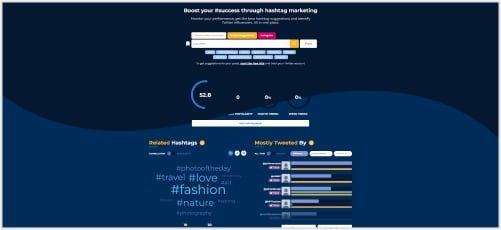
Hashtagify is a useful tool for social media users to analyze and track the effectiveness of social media hashtags. It provides detailed analysis of a hashtag’s popularity, helping you pick strong tags for your posts.
It is a great source for identifying and analyzing top-trending hashtags in your industry so they can be used in your social media content. The tool gathers intelligence on a hashtag’s popularity and reports insights back to the user.
Features
- Hashtag popularity tracking
- Related hashtag suggestions
- Trend monitoring over time
- Influencer and usage data for hashtags
- Exportable reports for campaigns
Pricing
The pricing plans start at $19 per month.
5. Canva
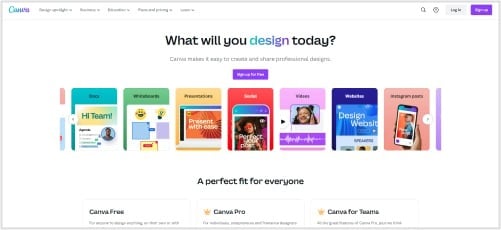
Canva is an excellent image-designing and video-making tool with a wide range of templates and design options. Users can create social media images, banners, and covers for almost every major platform. Canva also lets users create customizable videos for social.
Features
- Easy-to-use drag-and-drop interface
- A large library of templates
- Thousands of graphic elements and photos
- Dozens of design tools and brand kits
- Bulk publishing for videos and images
- Seamless integration with other tools
Price
Canva offers a generous free plan. Paid plans are available for individuals and teams with additional templates, brand controls, and collaboration features. Check Canva’s website for the most up-to-date pricing.
How to choose the right social media management platform
Because tools are a significant part of your social media management costs, choose them carefully.
When evaluating a social media management platform or social media scheduling tool, look for:
- Supported networks: Does it support all the platforms you use today—and plan to use soon?
- Planner and calendar: Is there a visual social media planner so you can see all posts at a glance?
- Publishing and automation: Does it handle bulk uploads, queues, and optimal send times?
- Inbox and engagement: Can you manage comments and DMs across channels from one place?
- Analytics and reporting: Does it provide channel-level and campaign-level performance data?
- Collaboration features: Can your team and clients review, approve, and comment inside the tool?
- Pricing: How does cost scale with users, profiles, and features?
For many teams, using an integrated platform like ContentStudio instead of several point tools lowers overall social media management costs while improving consistency and reporting.
Measuring ROI of social media management
If you are going to invest in social media management, you need a reliable way to see whether it is paying off — research exploring [PDF] How a Cost-Effective social media strategy translates into measurable business outcomes underscores why tracking ROI from the start is essential.
Key metrics to track
Move beyond vanity metrics like likes and followers. Instead, look at:
- Reach and impressions: How many people see your content?
- Engagement rate: How often people interact (likes, comments, shares, saves, clicks) relative to reach or followers
- Click-through rate (CTR): How frequently people click your links
- Website traffic from social: Sessions and behavior from social sources in your analytics
- Lead and signup volume: Form fills, demo requests, trials, and newsletter signups from social
- Revenue impact: E-commerce purchases or pipeline attributed to social media
- Customer service metrics: Response time, resolution time, and CSAT driven by social channels
Tie metrics back to business goals
To make your reports meaningful for leadership:
- Connect social goals to business goals: Example: “Increase demo requests from social by 30%” instead of “Get more followers.”
- Show trends, not just snapshots: Month-over-month and quarter-over-quarter comparisons clarify whether your social media management investments are working.
- Tell the story behind the numbers: Do not just paste charts. Explain what you tested, what you learned, and what you will adjust next.
Social media management tools like ContentStudio make reporting easier by pulling channel data into one dashboard, so you are not rebuilding everything in spreadsheets.
How to build and justify your social media budget
Once you understand the drivers of social media management costs, you can build a budget that leadership and clients are more likely to approve.
Step 1: Define clear objectives
Decide what you want social to do for the business:
- Brand awareness
- Lead generation
- Direct sales
- Customer support
- Community building
Your goals determine how much content you need, which platforms matter most, and whether you need advanced tools or extra headcount.
Step 2: Map out required activities
Turn goals into tasks:
- How many platforms will you use?
- How often will you post on each?
- Do you need daily community management?
- Will you run ongoing paid campaigns?
- How often will you report and review strategy?
This gives you a sense of required hours, tools, and specialists.
Step 3: Estimate people, tools, and media
Break your budget into:
- People: In-house salaries, freelancer retainers, or agency fees
- Tools: Social media management platform, design tools, analytics, and other software
- Media: Paid ads and influencer fees
This structure makes your social media management costs transparent and easier to defend.
Step 4: Communicate value, not just cost
When presenting your budget:
- Tie line items directly to goals (“We are investing X in a social media scheduling tool to enable daily posting without adding headcount.”)
- Share benchmarks and case studies where social drove leads, sales, or retention
- Offer options at different investment levels (good / better / best) to frame price vs. impact
Leaders are far more likely to approve budgets when they clearly see how each dollar contributes to business results.
Conclusion
Your social media management costs in 2026 depend on several factors: business size, goals, content volume, tools, and the skill level of the people managing your channels.
A company with multiple locations and a 50-person team will naturally have a different budget and resourcing model than a two-person startup. Some entrepreneurs handle everything themselves with a lean stack of social media management tools. Others hire full-time managers or rely on freelance social media managers to keep costs flexible.
This guide gives you a realistic overview of what to expect when you start budgeting for social media management costs. Pricing still varies by country, niche, and provider, so always do your due diligence. Start by clarifying your goals and auditing your current setup. Then test a model for a few months and adjust based on performance and capacity.
Treat social media management as an investment, not a random expense, and it can become a reliable, measurable growth channel for your brand.
FAQs
1. How much does social media management software typically cost?
Pricing for social media management tools varies widely depending on features, number of accounts, team members, and publishing limits. Entry-level plans may start around a low monthly fee, while advanced or agency plans can cost significantly more. Most platforms offer tiered pricing to suit different needs.
2. What factors influence the cost of social media management tools?
Key factors include the number of social accounts you need to connect, the number of users or team members, advanced features like AI content creation, analytics and reporting, automation options, and whether the tool supports multiple workspaces or client management.
3. Is it better to choose a cheaper plan or a more expensive one?
It depends on your goals. A basic plan might suffice for simple scheduling and publishing, but if you need advanced analytics, multilingual content support, AI features, or team collaboration tools, investing in a higher-tier plan often delivers better value and saves time in the long run.
4. Are there additional costs besides the subscription fee?
Some platforms may charge extra for add-ons like premium analytics, AI content credits, additional user seats, or priority support. Always check what features are included in each plan to avoid unexpected fees.
5. How much does a social media manager charge?
Rates for social media managers vary based on experience, services, and results. As a general guideline, many charge between $35 and $350 per hour. Seasoned managers with strong portfolios and proven campaigns sit at the higher end, while beginners and assistants are usually at the lower end.
6. What is the standard rate for social media management?
On average, social media management often costs $20 to $50 per hour for basic services, but that does not tell the whole story. Many experts place the range at $35 to $350 per hour, depending on the number of platforms, included services (strategy, content, ads, reporting, etc.), industry, and complexity. Always review what is included before comparing rates.
7. What skills are required for social media management?
A social media manager should understand how social platforms work and how content supports business goals. Common skills include:
- Content planning, publishing, and scheduling
- Social media analytics and reporting
- Basic graphic design and familiarity with video
- Community management and customer care
- Paid social ads and campaign setup
- Collaboration, copywriting, and basic project management
Social media management can be enjoyable if you like experimenting with content and audience behavior. Without that interest—or without proper systems—it can quickly feel overwhelming.
How do I choose between a freelancer and an agency?
Freelancers suit smaller budgets and projects, offering flexibility and affordability. They are ideal for hands-on collaboration and ongoing lightweight support.
Agencies provide specialized teams, broader expertise, and backup support at higher costs. Choose agencies for complex campaigns requiring diverse skills or faster turnaround across multiple channels.
Your decision depends on your budget, project scope, internal capacity, and timeline.
Is social media management worth the cost?
If you have clear goals, choose the right model (DIY, freelancer, agency, or hybrid), and give it enough time to work, social media management usually pays for itself through increased awareness, traffic, leads, and customer loyalty.
The key is to:
- Track the right metrics
- Use a solid social media management platform
- Adjust your approach based on data
Treat social as a strategic channel instead of an afterthought, and your social media management costs become an investment with clear returns—not just another line item.
Recommended for you

How to create brand-aligned content using ContentStudio’s AI writing assistant

Top 10 AI video generation trends & use cases everyone should watch

Social media management costs in 2026: A pricing guide for businesses








Powerful social media management software
7-day free trial - No credit card required.