Bulk-generate & schedule posts in seconds with Smart Scheduling. Try now!
How much does TikTok pay per view: Creator earnings guide 2026
 Published by Waqas Ali
How much does TikTok pay per view? The burning question that has been haunting aspiring content creators since the platform launched its Creator Rewards Program. If you too have caught yourself calculating potential earnings while watching someone’s corn-ribs recipe go viral, wondering if your 47-view video about your cat’s weird sleeping positions could somehow fund your next coffee run, the answer is yes! But it may not be as straightforward as assembling IKEA furniture.
Now, unlike your childhood lemonade stand, where profit margins were beautifully simple, TikTok’s creator economy operates on an algorithm that might be a little more complex than a 15-second dance trend, but it’s essential to understand before you quit your day job to become a full-time performative storyteller. Read along as we break down the real numbers behind those viral moments.
Also Read: How to go viral on TikTok?
How much money can you make on TikTok?
TikTok earnings aren’t like traditional employment where you clock in, work eight hours, and receive a predictable paycheck. Instead, think of it as performance-based income where your creativity, consistency, and audience connection determine your financial success.
The beauty of TikTok’s monetization lies in its diversity. You don’t need to be the next Charli D’Amelio to make meaningful money. You could be sharing life hacks, showing off your gardening skills, reviewing products, or just being authentically entertaining. In any case, multiple revenue streams await creators who understand the platform’s ecosystem.
How much does TikTok pay per view?
The math on TikTok has changed significantly recently. TikTok utilizes RPM (Revenue Per Mille), meaning instead of a flat fee per single view, the platform calculates your earnings based on every 1,000 qualified views.
How much does TikTok pay per 1,000 views?
While the old Creator Fund used to pay pennies, the current Creator Rewards Program is much more lucrative. In 2026, creators typically earn between $0.40 and $1.00 per 1,000 views. To put this in perspective, if your original, high-quality video gets 500,000 qualified views, you could earn anywhere from $200 to $500. That’s a massive jump from the old system where that same video would have only netted you about $20.
But there’s a catch: TikTok now prioritizes videos longer than one minute. If your content is under 60 seconds, it likely won’t qualify for these higher rewards. Furthermore, views must be “qualified,” meaning they come from real users in the “For You” feed who watch for at least five seconds. The algorithm is now smart enough to filter out bot traffic and low-effort “looping” clips.
How much money do you get on TikTok for 1 million views?
The million-view milestone is more rewarding than ever. In 2026, a video with 1 million qualified views can generate between $400 and $1,000. In today’s economy, that’s enough to cover a substantial car payment, a premium grocery haul, or a very nice weekend getaway.
However, relying solely on these payouts is still risky. RPM can fluctuate based on your audience’s location (US/UK views pay more) and your content niche. Smart creators treat these rewards as a “performance bonus” while building their primary income through brand deals, TikTok Shop commissions, and direct fan support.
Also Read: How to share TikTok videos?
How much do content creators make on TikTok?
While the pay-per-view model (RPM) provides a steady baseline, the real story of “how much creators make” in 2026 lies in a diversified ecosystem of revenue streams. Most full-time creators no longer rely on TikTok to pay them directly; instead, they use the platform as a funnel for high-ticket opportunities.
Here is a breakdown of the earning potential across different creator tiers.
1. The micro-creator (10K – 50K followers)
At this stage, most creators are still working “side-hustle” hours. However, in 2026, a micro-creator in a high-value niche (like Home Decor or Tech Reviews) can earn $200–$500 per video via TikTok Shop commissions if their product recommendations go viral, often outearning their direct ad-revenue payouts.
- Estimated annual income: $5,000 – $30,000
- Primary income sources: TikTok Shop Affiliate commissions and small-scale brand deals.
Read Up: Micro influencer marketing: A guide to grow your business with it
2. The mid-tier creator (50K – 500K followers)
This is the “sweet spot” for many. Mid-tier creators are seen as more relatable than celebrities, leading to higher conversion rates for brands. A single sponsored post for a mid-tier creator in 2026 typically commands $1,000 to $5,000, and many are earning a full-time living by partnering with 2–3 brands per month.
- Estimated Annual Income: $40,000 – $150,000
- Primary Income Sources: Consistent brand partnerships, the Creator Rewards Program, and Live Gifting.
3. The macro-creator (500K – 1M+ followers)
At this level, the creator is a business entity. Beyond the $5,000–$20,000 per video brand fee, these creators often launch their own brands (D2C). In 2026, “Creator-Led Brands” in the beauty and fitness space are generating seven-figure revenues by bypassing traditional advertising and selling directly to their TikTok audience.
- Estimated Annual Income: $200,000 – $1M+
- Primary Income Sources: Large-scale brand ambassadorships, talent agency deals, and their own product lines.
Comparison: Income streams by revenue share
In 2026, the average successful creator’s “Income Pie” looks like this:
| Revenue Stream | % of Total Income | Description |
| Brand Deals | 45% | Direct partnerships to promote a product or service. |
| TikTok Shop/Affiliate | 25% | Commission earned on every product sold through a video. |
| Creator Rewards Program | 15% | Direct “pay-per-view” from TikTok (RPM). |
| Live Gifting | 10% | Virtual gifts sent by fans during TikTok Lives. |
| Other (Digital Products) | 5% | Selling courses, presets, or exclusive community access. |
The “Niche Premium” factor
In 2026, your niche matters more than your follower count.
- High-paid niches: Personal Finance, Business/SaaS, Real Estate, and Healthcare. Brands in these sectors pay a premium because the audience has high purchasing power.
- Volume-based niches: Lifestyle, Comedy, and Dance. These creators need much higher view counts to attract the same revenue because their audience is broad and general.
Key takeaway for 2026: The most successful creators are those who treat TikTok as a discovery engine. They use the views to build a community, then move that community to platforms they “own,” such as email lists or paid subscription communities.
Factors affecting TikTok earnings
1. Search value
In 2026, TikTok has transitioned from a purely social app into a powerful discovery engine. The algorithm now assigns a Search Value to every video. Videos that answer specific user queries (e.g., “How to fix a leaky faucet” or “Best 2026 budget travel tips”) earn a higher RPM.
TikTok wants to compete with Google. If your video is discovered via the search bar rather than just the “For You” feed, it proves your content has long-term “evergreen” value, which advertisers are willing to pay more to be associated with.
Use descriptive, keyword-rich captions and on-screen text to signal to TikTok that your video provides “Search Value.”
2. Video length & “watch depth”
In the current Creator Rewards Program, videos under 60 seconds earn significantly less (or zero) compared to long-form content. The algorithm prioritizes Watch Depth—the percentage of your video that users actually finish. A 2-minute video with a 50% completion rate will often outearn five 15-second videos combined. Longer videos allow TikTok to show more mid-roll ads or keep users on the platform longer.
To maximize earnings, aim for the 60 to 90-second sweet spot. This length is long enough to qualify for the highest reward tier but short enough to maintain a high completion rate.
3. Advertising value
Beyond where your audience lives (geography), TikTok now tracks the Advertising Value of the specific people watching your clips. If your viewers are “high-intent shoppers”—people who frequently click ads or use TikTok Shop—the ads shown on your videos become more expensive.
An advertiser will pay more to show a car ad to a 35-year-old professional than a toy ad to a teenager. If your content naturally attracts a demographic with high purchasing power, your RPM can climb from the standard $0.50 to as high as $6.00.
4. Technical Production Score (1080p+ & audio originality)
In 2026, TikTok’s “Quality Standards” are measured by AI-driven technical benchmarks. Videos uploaded in 1080p or 4K resolution with “Clear Audio” (low background noise) receive a slight percentage boost in their reward calculation.
High-definition content keeps users on the app longer and makes the platform look more “premium” to high-end brands. Conversely, if your video uses “recycled” or “non-original” audio that has been flagged as low-quality or AI-generated without disclosure, your earnings can be suppressed by up to 50%.
5. Follower count impact
Your follower count is like your credit score in the creator economy, and while it is important, it’s not exactly the whole story either. Although more followers generally do translate to more earning potential, engagement rates often matter more than raw numbers.
But you do need to hit a certain follower threshold to be eligible to be paid in the first place.
6. Engagement rate importance
Views are all well and good, but it’s engagement that really gets things moving forward and onward. The various types of engagement metrics, such as likes, comments, shares, and saves, are like applause in the digital world, signaling to TikTok that your content is resonating with audiences and not merely existing.
Higher engagement rates can catapult your content into the algorithm’s good graces, which means more visibility, more views, and ultimately, more money in your digital piggy bank.
How many likes do you need on TikTok to get paid?
There’s no specific like quota, but engagement rate is crucial. You’d need to aim for a 3-6% engagement rate generally. So if you have 100,000 followers, you should be consistently getting 3,000-6,000 likes per video. It’s like you’re maintaining a good GPA, but for social media.
7. Content niche influence
Not all content is treated equally in TikTok’s economic ecosystem. The type of content you choose to put out there matters. It has been observed that educational content, how-to videos, and original creative content actually tend to perform better in the Creator Rewards Program. Comedy skits and dance videos can only get you so far, as they might get you famous, but they won’t necessarily get you paid at the same rate.
8. Geographic location effects
Your location impacts your earnings more than you might assume. Once again, you might find yourself thinking you were born in the wrong country, as the Creator Rewards Program isn’t globally available, and even within participating countries, RPM rates can vary significantly. Creators in tier-one countries like the US, UK, and Canada generally see higher earnings than those in emerging markets.
Unfortunately, with these features, it’s like real estate—location, location, location, but for digital content.
9. Content quality and originality
TikTok’s algorithm has developed quite the sophisticated palate. It favors original, high-quality content that offers genuine value to viewers. Reposts and low-effort content are essentially the fast food equivalent of social media, they are quick and easy but not particularly rewarding.
When does TikTok start paying you?
Account eligibility criteria
As we’ve already covered, you need at least 10,000 followers to even apply for the Creator Rewards Program. Additionally, you must have a personal account with over 100,000 views in the last 30 days that you’re applying from and be 18+ years old. For most creators, this journey would take at least 3-12 months of consistent, quality content creation before they can potentially seek out any earnings from the platform.
Also Read: How to change your age on TikTok?
3 Steps to apply to the TikTok Creator Rewards Program
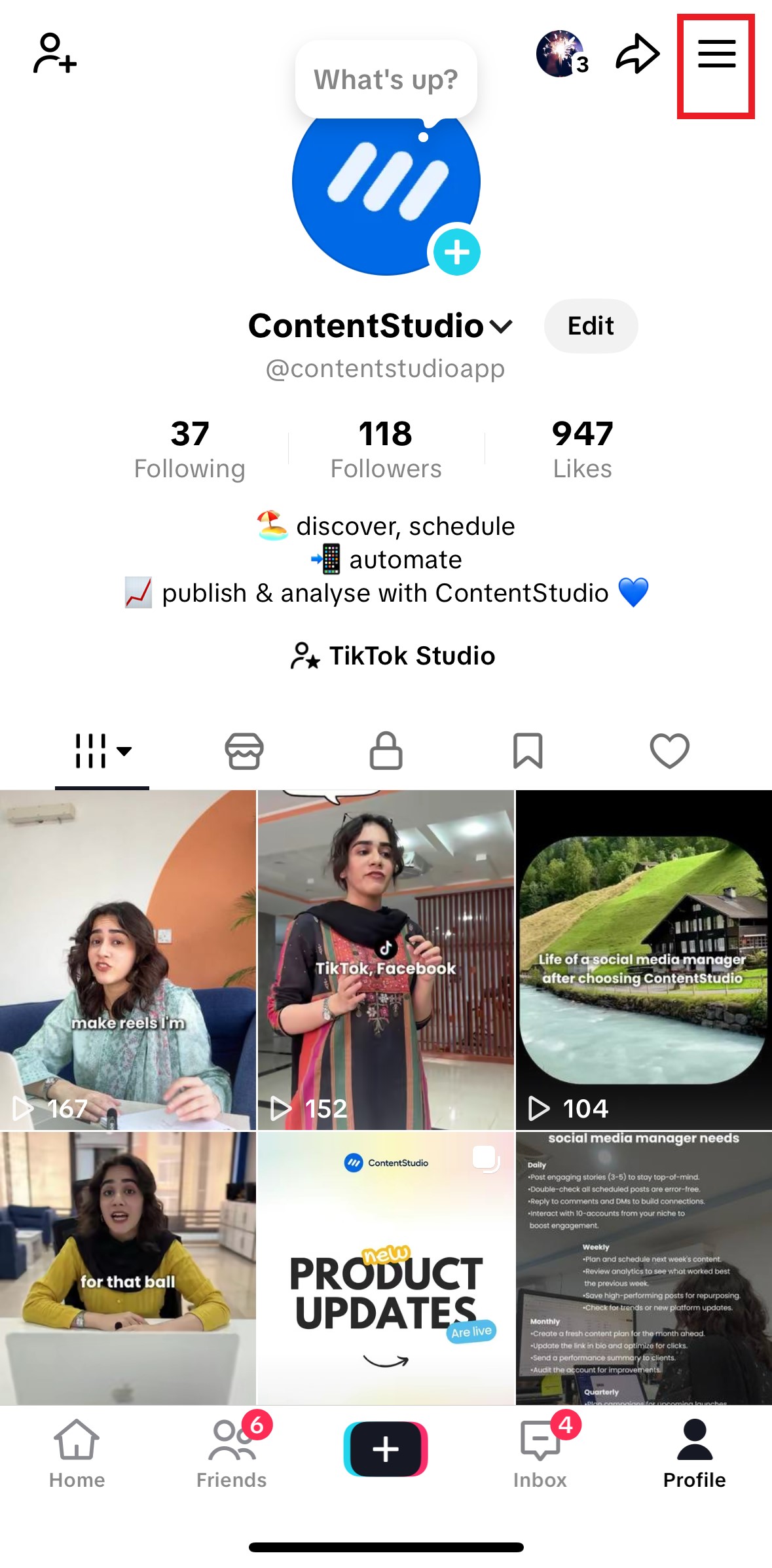
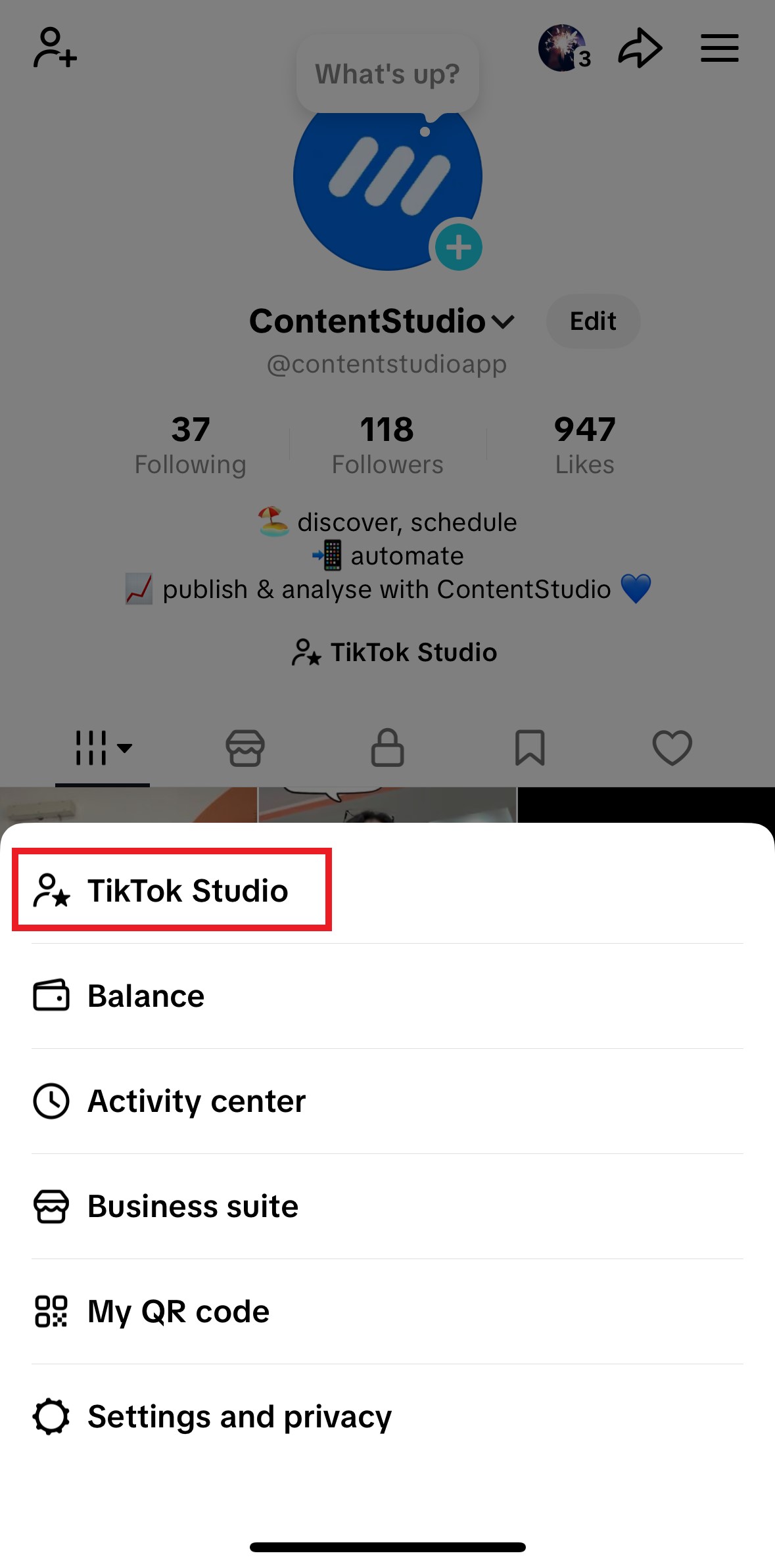
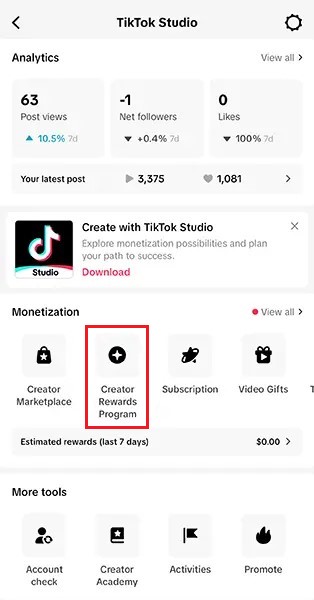
Once you meet the requirements, applying is refreshingly straightforward. All you need to do is follow these steps to apply:
- Go to your profile on the app and tap the Menu button.
- Select TikTok Studio.
- Navigate to the Creator Rewards Program and apply.
Approval process
TikTok typically reviews applications within a few days to a few weeks, depending on how many other creators are also trying to join the money-making party. The platform checks your account for community guideline violations, authentic followers, and content quality, basically to ensure you’re not a digital troublemaker.
Payment schedule and methods
TikTok pays creators monthly, typically between the 1st and 15th of each month for the previous month’s earnings. Payments come through PayPal or direct bank transfer, depending on your location. It works like any other paycheck but for being entertaining online.
How to get paid on TikTok
Now that you know if and how much TikTok pays over various metrics, you can start thinking about how to take yourself there. Here’s your roadmap to TikTok monetization:
- Build your following: Focus on reaching 10,000 authentic followers through consistent, engaging content that doesn’t make people want to scroll past.
- Generate views: Aim for 100,000 views in 30 days by posting regularly and bandwagoning on trending waves without exhausting your audiences or yourself of originality.
- Maintain quality: Keep your account squeaky clean with original quality content that follows community guidelines.
- Apply for the program: Once eligible, apply through your TikTok Creator tools and wait for the platform to grant you the green light.
- Optimize for RPM: Focus on longer-form content (over 60 seconds) and original material that showcases your unique perspective
Also Read: TikTok SEO: How to rank high on TikTok
5 alternative ways to make money on TikTok
TikTok offers multiple monetization avenues for creators to explore; you need not only rely on one or even all. Ideally, you should see which of the monetization streams works best for your content and audience as well as aligns with your brand. Here are a few ways you can make money on TikTok to give you an idea of the possibilities on this powerful platform:
1. Live streaming and virtual gifts
TikTok Live allows creators to receive virtual gifts from viewers; in a sense, it is digital busking. Popular streamers can earn $50-$500 per live session, depending on their audience size and how entertaining they are in real-time.
2. Brand partnerships and sponsorships
This is where the real money lives. Brand collaborations can pay anywhere from $100 for micro-influencers to $10,000+ for top creators. You just have to play the part of a walking, talking advertisement, but behind a screen, way cooler and more lucrative.
3. Affiliate marketing opportunities
Promoting products through affiliate links can generate passive income streams. Many creators earn $500-$5,000. We place a much-needed emphasis on “authentically” here, as sponsored or paid promotions are not going to be monetarily rewarded by TikTok.
4. Merchandise sales through tiktok shop
The TikTok Shop integration is unique in the sense that it allows creators to sell products directly through their videos. It’s particularly powerful for creators in fashion, beauty, and lifestyle niches who can turn their content into a virtual storefront.
5. Cross-platform monetization strategies
Smart creators treat TikTok as the appetizer and not the main course. They repurpose their TikTok success to instead drive traffic to their YouTube channels, Instagram creator accounts, personal websites, and email lists, where they can diversify their income streams.
Smart ways to maximize your tiktok earnings
1. Optimize for the “61-Second” reward tier
With the transition to the Creator Rewards Program, TikTok now heavily incentivizes mid-length content over short clips. To maximize your direct ad-revenue payout (RPM), you must create videos that are longer than 60 seconds. The strategy here is not just hitting the one-minute mark, but mastering the “double hook”: one at the start to grab attention and another at the 45-second mark to ensure viewers stay past the 60-second threshold. High-performing creators often see their RPM double when they maintain a completion rate above 40% on these longer videos.
2. Create search first content
In 2026, TikTok is a major search engine. You can significantly increase your earnings by creating “Search-First” content—videos that answer specific, high-intent questions within your niche. By using keyword-heavy captions and on-screen text, your Reels and TikToks will continue to gain “qualified views” from the search bar months after posting. This “evergreen” traffic often carries a higher RPM because it signals to the algorithm that your content has high utility for advertisers.
3. Leverage the “Live-to-Commerce” pipeline
Livestreaming has become the highest-earning activity on the platform in 2026. Successful creators use their daily videos as “trailers” to drive traffic into TikTok Shop LIVE sessions. During these lives, you can earn through three simultaneous streams: virtual gifts from fans, direct brand sponsorships for the stream, and a percentage of every sale made through integrated product links. This real-time interaction removes purchase friction and often generates 5–10x more revenue than standard video uploads.
4. Build “Hybrid” affiliate partnerships
Instead of one-off sponsored posts, move toward “Hybrid” commission models in the TikTok Creator Marketplace. These deals involve a smaller flat fee combined with a higher-than-average sales commission (often 20%–30%). This strategy protects your time by providing guaranteed pay while giving you uncapped upside if the video goes viral. In 2026, brands are increasingly looking for “long-term ambassadors” rather than single-post influencers, making recurring revenue easier to secure.
5. Create “Platform-Agnostic” digital assets
The most resilient creators use TikTok as a funnel for owned assets. Use your high-reach videos to promote digital products like eBooks, exclusive community access (via Subscriptions), or personalized coaching. By driving users to a “Link in Bio” tool, you decouple your income from the algorithm’s whims. In 2026, selling a $20 digital guide to just 1% of a million-view video results in $200,000 in revenue—far outpacing any direct platform payout.
6. Content strategy for higher engagement
You need to focus on creating content that begs for interaction, and for that you need to plan your strategy. Try to ask questions, create polls, and respond to comments like you’re having coffee with friends because the more engagement your content generates, the more likely it is to be blessed by the algorithm.
7. Consistency and posting schedule
Consistency is the key to the vault of the creator economy. Successful creators typically post 1-3 times daily and maintain a recognizable style that makes their content instantly identifiable. Use content calendars and social media management tools such as ContentStudio.io to easily manage posting schedules, learn the best times to post new content, and stay organized without losing track of your carefully curated interpretive dance videos or your sanity.
Social Media Content Calendar
Stay consistent and organized with Contentstudio’s social media content calendar for marketers and agencies.
Get Started for FREE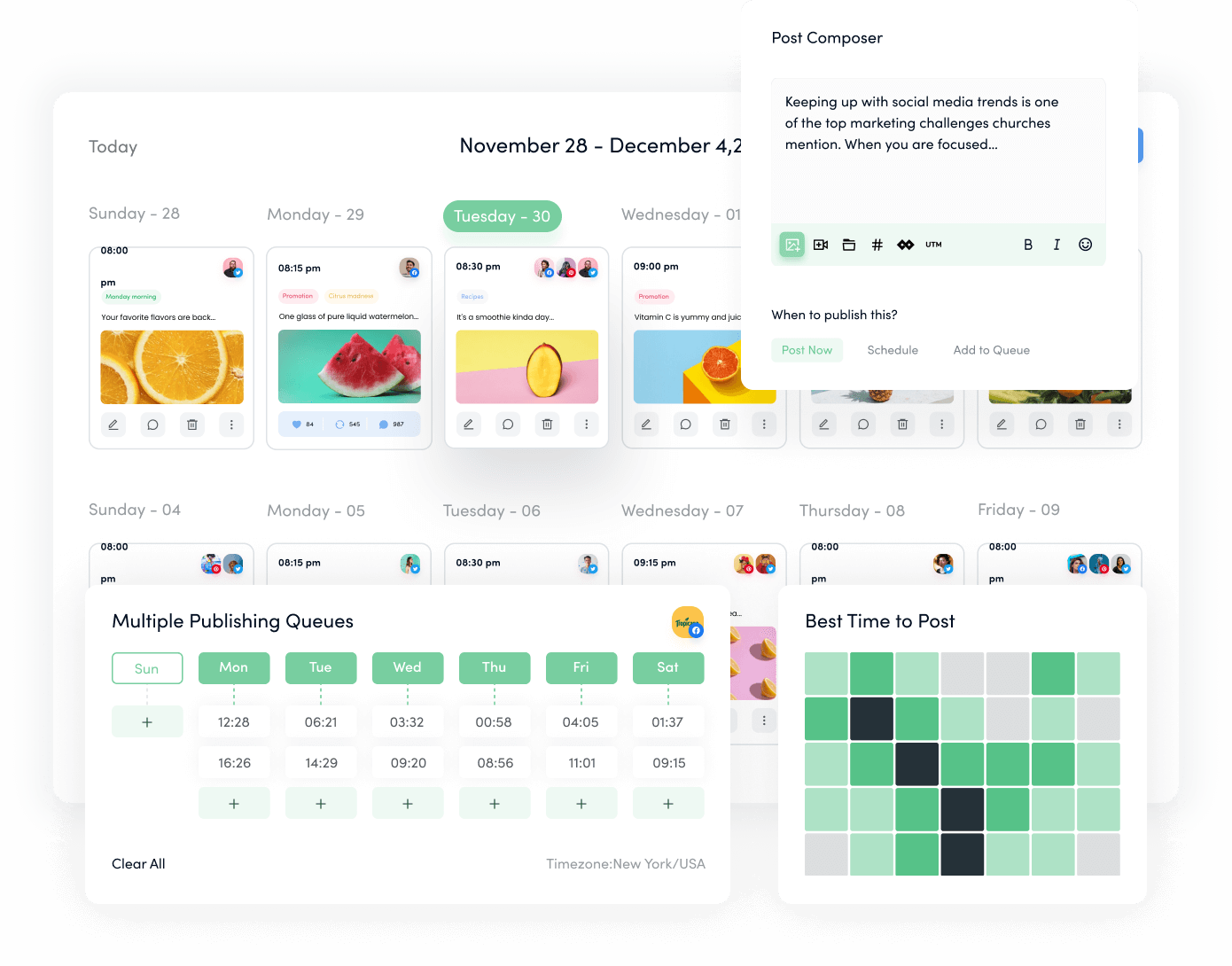
8. Audience-building techniques
Growing your audience requires understanding your niche and delivering value consistently. Use trending hashtags strategically, collaborate with other creators, and engage with your community as if you’re hosting the world’s most entertaining digital dinner party—only you need to make sure you’re the one who ultimately cooked and ate!
9. Authenticity and brand alignment
Audiences can smell insincerity from across the internet. Only promote products and brands you genuinely believe in. Authentic recommendations convert better and help you sleep better at night. Not to mention, sponsored content will not be rewarded directly by TikTok but by the brands you partner with. Think twice before accepting offers, making sure they align with your brand and values.
10. Cross-platform promotion
Use TikTok as your digital business card. Promote your Instagram, YouTube channel, newsletter, or personal website to create a creator ecosystem that doesn’t rely on one platform’s whims.
Common TikTok monetization misconceptions
Realistic beginner earning expectations
Many new creators expect to become the next MrBeast overnight. The reality is that building sustainable income takes time, strategy, and probably more coffee than is medically advisable. Most successful creators took 6-18 months to see significant earnings. So realistically you’re looking at making just $100 at the very start and building from there. But hey, some money is better than no money, and if you do it right, you should see those digits increase over time.
Timeline for monetization success
Rome wasn’t built in a day, and neither is a creator career. Focus on creating content that genuinely adds value to people’s lives, explore multiple revenue streams to see what works best for you and your brand, and the monetization will follow naturally. You’re going to have to cross your fingers, commit and trust the process, and as long as you’re putting in genuine work and putting out quality content, you’re going to reap the rewards—literally.
Also read: Does TikTok notify screenshots or screen recordings?
Conclusion
So, how much does TikTok pay per view? The answer is $0.40-$1.00 per 1,000 views, but that’s just the tip of the iceberg. The real money in the creator economy comes from treating your TikTok presence as the foundation of a broader digital business empire. Smart creators use TikTok as their launching pad for brand partnerships, affiliate marketing, and cross-platform monetization opportunities that dwarf the platform’s direct payments.
The creator economy rewards authenticity, consistency, and genuine value creation above all else. Focus on building real connections with your audience, and the financial rewards will follow naturally. In a world where anyone can become a creator, the ones who succeed are those who treat their audience like friends, not just numbers on a screen, while staying true to their unique voice in an increasingly crowded digital landscape.
FAQs
Does TikTok pay creators per view?
TikTok doesn’t pay a fixed amount per individual view. Instead, earnings are usually calculated per 1,000 views (RPM) through monetization programs like the TikTok Creator Rewards Program.
How much does TikTok pay per 1,000 views?
In 2026, the TikTok Creator Rewards Program typically pays around $0.40 to $1.00 per 1,000 views.
What does that mean per view?
At roughly $0.40–$1.00 per 1,000 views, TikTok’s pay equates to about $0.0004–$0.001 per view on average.
How much could a video with a million views earn?
Under current payout rates, a video with 1 million views might earn roughly $400–$1,000 through TikTok’s Creator Rewards Program.
What affects how much TikTok pays per view?
Earnings depend on factors like audience location, engagement, content length, and whether you’re in a monetization program. Views from high-value regions (like the US) and strong engagement can boost earnings.
How long does it take to get paid on TikTok?
TikTok processes payments monthly, typically between the 1st and 15th of each month for the previous month’s earnings. You’ll need to reach the minimum payout threshold (usually $50) before receiving payments.
How many views do you need to get paid on TikTok?
You need at least 1000 views on a video to get paid on TikTok. In addition, you need 100,000 views in the last 30 days to qualify for the Creator Rewards Program, along with 10,000 followers and being 18+ years old.
Recommended for you

How to create brand-aligned content using ContentStudio’s AI writing assistant

Top 10 AI video generation trends & use cases everyone should watch


Social media management costs in 2026: A pricing guide for businesses






Powerful social media management software
7-day free trial - No credit card required.